
A useful first AI workflow starts with a task your team understands well enough to check. Choose something repeatable, give it a clear outcome, and name the person who will review the result. Then test whether it improves the whole process, including the time spent checking and correcting it.
Organizing an inquiry, preparing a draft from approved information, or summarizing meeting notes can provide a manageable starting point. The right choice depends on where your team spends time and how reliably it can spot mistakes.
Choose a task with a clear beginning and end
Before choosing a tool, describe the current process. What arrives? What does someone do with it? What should the finished work contain, and who uses it next?
“Use AI in sales” is too broad to test. “Turn a new inquiry into a structured summary for the person responding” is specific enough to inspect. You can compare the summary with the original message and identify what was omitted or misread.
Favor a task that happens often enough to justify the setup and has a result your team can check without recreating all the work. If a template, checklist, or simple automation already solves it, include that option in the comparison.
Keep the first pilot concrete
Consider a hypothetical service business that receives inquiries through its website. Its team reads each message, identifies the requested service, notes any missing information, and prepares a response.
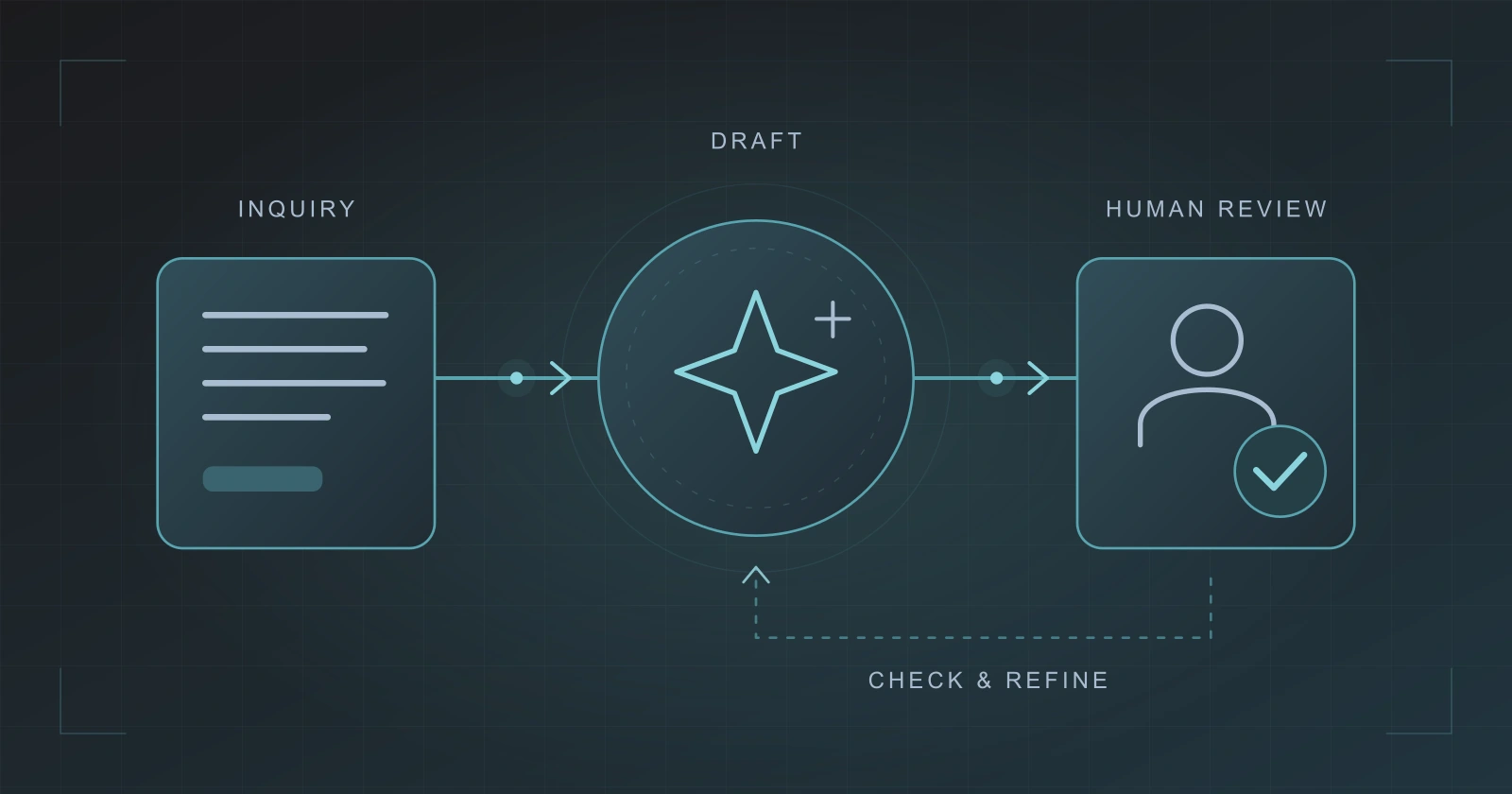
A small pilot could help organize those inquiries and prepare a draft for review:
- Read the inquiry. Extract the details the person actually supplied.
- Prepare a summary. Separate the requested service, stated timing, and unanswered questions.
- Draft a response. Use approved service information and flag anything that needs a person’s decision.
- Review before sending. A team member checks the original inquiry, corrects the draft, and decides what to send.
If the inquiry has no budget, the summary should leave it unknown. If it requests a service the business does not offer, the workflow should flag that mismatch. It should not invent a price or commit the team to a deadline.
The interactive inquiry example shows this kind of handoff. It is an illustration of a possible process, not evidence of a client result or a ready-to-deploy system.
Test beyond the easy example
One convincing demonstration tells you little about how a workflow will handle everyday use. NIST’s Generative AI Profile cautions against drawing broad conclusions from narrow, anecdotal assessments and calls for evaluation under conditions similar to deployment.
Build a test set around the work you expect. For the inquiry example, include a straightforward request, an incomplete message, conflicting details, an unrelated request, and a message asking for an exception. Use fictional examples or information approved for the selected tool; decide what data is allowed before the pilot begins.
Agree on the review criteria in advance:
- Accuracy: Does the result preserve the facts, leave unknowns unresolved, and avoid unsupported promises?
- Review effort: How much checking and rewriting does a person need to do?
- Total time: How long does the task take from input to approved result, compared with the current process?
- Exceptions: Does the workflow recognize when it should stop and ask for human help?
Record failures as well as useful results. For this pilot, an invented commitment would be a reason to stop and revise the workflow before further use. A polished writing style would not compensate for that mistake.
Make rollout a separate decision
Compare both approaches using the same kinds of work. Include preparation, corrections, and review in the timing, and account for tool costs and upkeep. A faster first draft may still take longer to turn into an approved response.
If the pilot shows useful results, document its limits and decide what everyday use requires. That may include connections to other systems, access controls, further testing, team training, and someone responsible for monitoring and troubleshooting. Keep the existing process available while the new one is introduced.
RVABro Media’s AI Consulting service can help assess a workflow and run a focused pilot. AI assessments and pilots are quoted individually. Implementation, integrations, testing, and rollout are scoped separately from the initial pilot, with ongoing support agreed separately as well. Live team sessions and practical documentation can be included with topics and format defined in the proposal.